
Long-term biomonitoring: A typical day of training and sampling
By Jeanne Gouws, CapeNature Ecologist
Long-term monitoring of species of ecosystems is important for tracking changes related to many factors, including the impacts of climate change. CapeNature conducts long-term monitoring activities for various creatures and ecosystems, great and small. One of these projects is the monitoring of three sites on the Eerste River in Jonkershoek, using aquatic macro-invertebrates. The sites vary with regards to impacts along the river and the monitoring is done seasonally, in order to account for changes associated with changes in weather through the year.
The most recent survey was conducted in early September 2020 (the spring sample) using the South African Scoring System, or SASS, version 5 method. Each family of macro-invertebrate collected (including crabs, insects and molluscs amongst others) has a linked score that indicates its sensitivity or tolerance to water quality impairments. Combined, the macro-invertebrates then give an indication of the water quality and habitat availability at each site.
Very high flow conditions was at the order of the day for this spring survey. As a result, sampling was more of a balancing act and core workout than usual. Prior to each venture into the strong flowing river, the CapeNature SASS accredited freshwater ecologist discussed the sampling method with the Jonkershoek Nature Reserve field staff, two Work Integrated Learning students from CPUT, as well as the Ecological Technician and Technical Assistant based at the Assegaaibosch Nature Reserve Office. This was followed by a demonstration through sampling for each of the three biotopes (instream habitats) separately. The sample from each biotope was then assessed and the invertebrates identified down to family level.
As the monitoring data for these sites go back to the early 1990’s, the seasonal patterns of variation of macro-invertebrate communities are fairly well known. It was therefore not surprising that the lower, and most impacted sites, had lower health scores than the uppermost site in the Jonkershoek Nature Reserve this time around. The middle site, located at a government weir below the Kleinplasie Dam, had the lowest scores, while the lowest site showed a slightly higher score. This was mainly due to the rejuvenation effects from good water quality tributaries that flow into the Eerste River downstream of the weir.
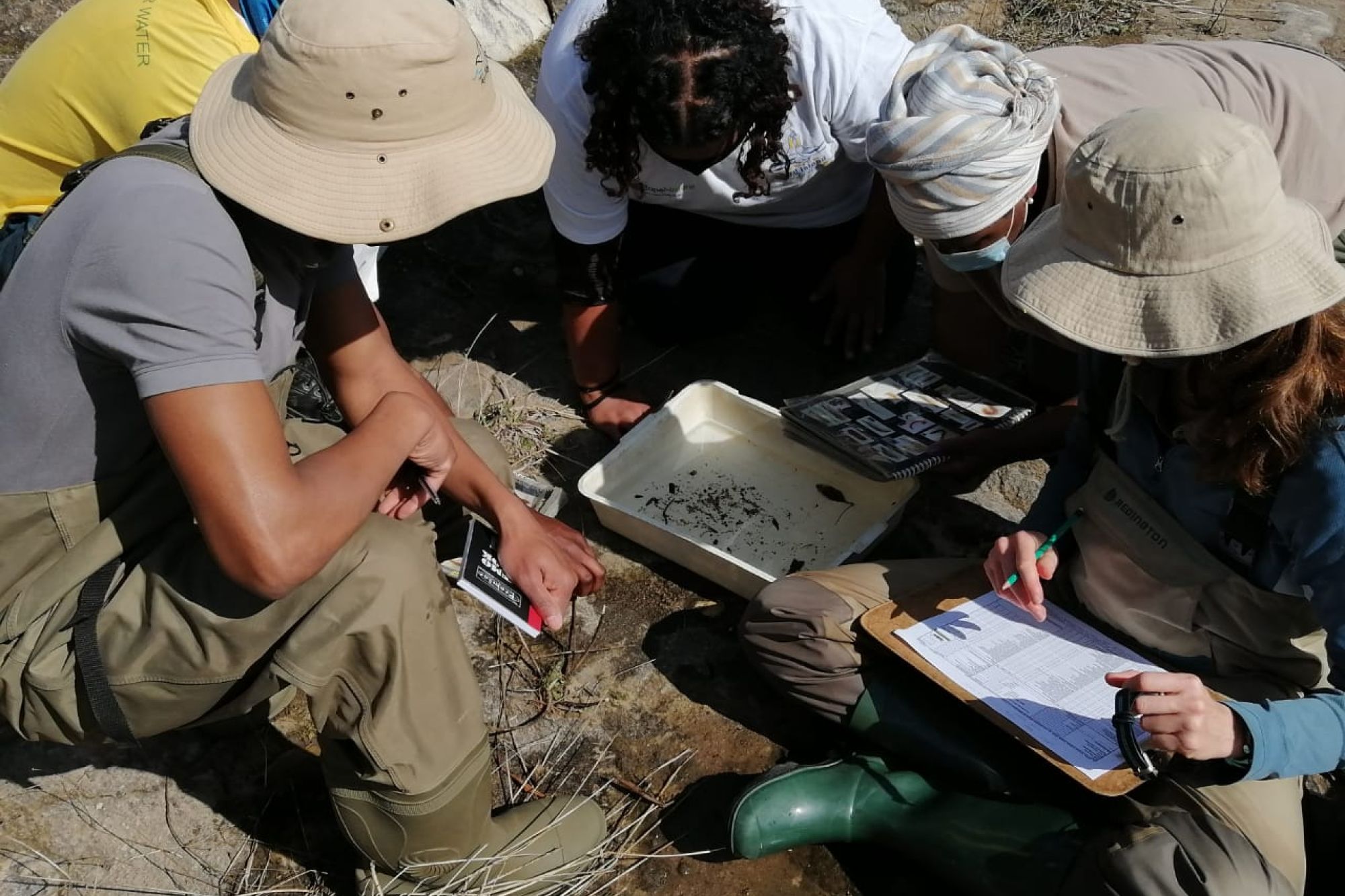
While the results obtained will inform the adaptive management of the river ecosystems in the Jonkershoek Nature Reserve, the process of training serves to capacitate regional staff in applying the sampling methods and learning what the data can be used for. Capacity building is essential, as it will allow for the continued monitoring of these sites over the long-term, as well as contributing to the documentation of the unique biodiversity in the Western Cape Province.
Related News

Rare plant monitoring at Waterval Nature Reserve
Waterval Nature Reserve is home to an incredible variety of special plant species, one of which is the Critically Endangered Sorocephalus imbricatus. One of the populations is very heavily overgrown with Pinus pinaster.

CapeNature’s Stony Point now daily on WildEarth TV
“Penguin Beach” is an expert-hosted live and interactive experience with the colony of penguins. Viewers can follow regular characters within this colony in real time and ask the experts of CapeNature and WildEarth questions via Twitter and a chat option. This one of a kind LIVE experience on WildEarth allows viewers to watch it daily throughout the year, following specific characters as they grow from being newborns to fully fledged adults.

CapeNature and Dyer Island Conservation Trust – Strategic partnership yields multiple conservation benefits in the Overberg region
The African penguin is on the brink of possible extinction in the wild within the next decade. Partnerships are vital in the ongoing effort to stabilise the African penguin population numbers.

Focus on spiders
Halloween, with its focus on terrifying creatures such as spiders, is just behind us. It’s a good time to think about our attitudes to spiders and some of the reasons to protect rather than kill them.

CapeNature urges the public to practice fire safety this fire season
CapeNature responded to 76 fires resulting in 31 198.7 hectares of natural and other veld burnt during the 2020/21 fire season. As we enter the 2021/22 fire season, CapeNature appeals to the public to help prevent fires and report smoke or fire.

Meet the winner of our "Interview with a tree" competition
The judges had a difficult decision to make, but the results are in, and we are delighted to announce the winner of this competition.