
Oiling the Response
The successful implementation of the Phakisa Operations: Ocean Economy workstreams, particularly the Marine Transport and Manufacturing and Offshore Oil and Gas Exploration work streams are bound to result in accidental pollution events, despite the best practice being used to manage and prevent these unfortunate events.
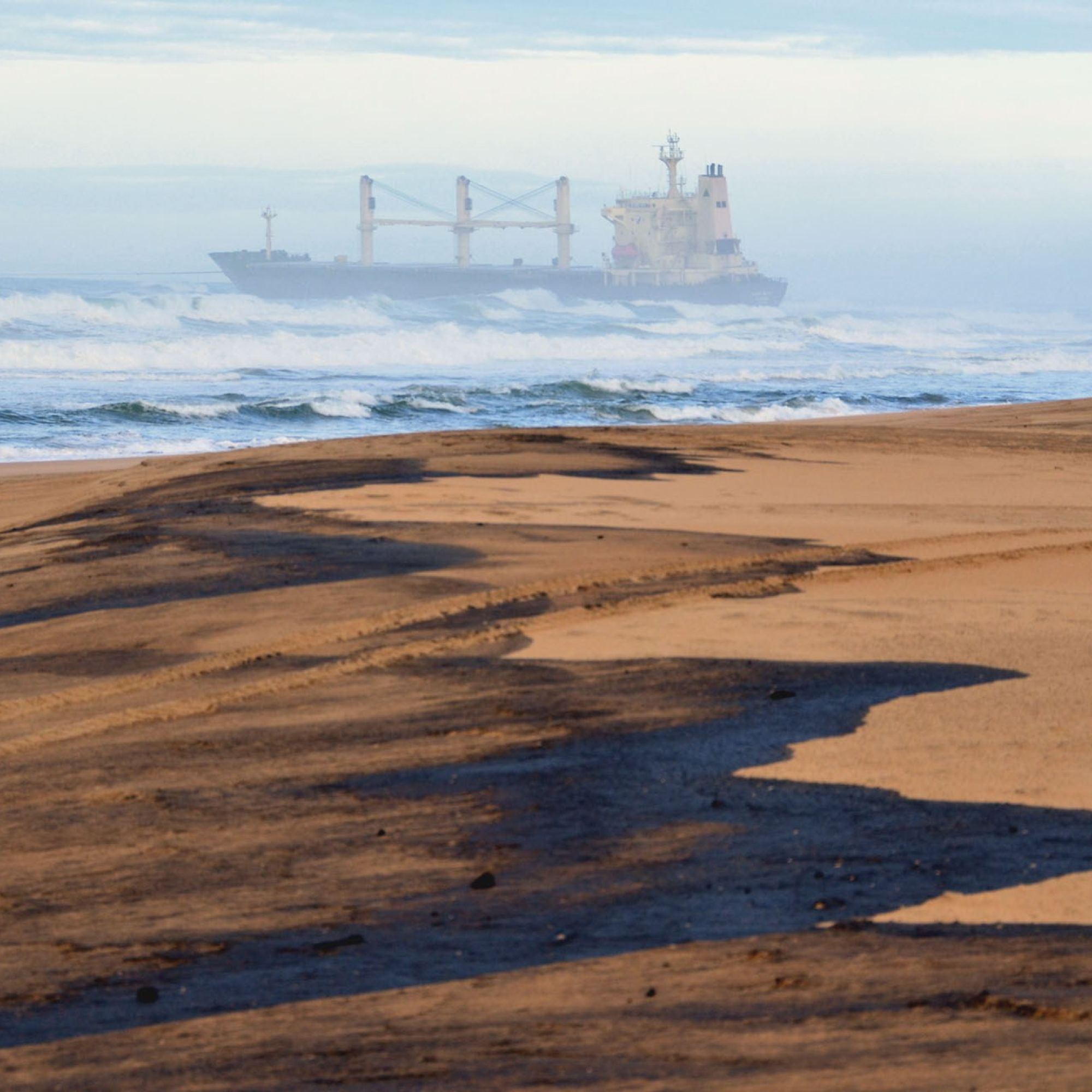
Photo by Keith Spencer, Kianu Satu, 2013.
In August 2013, the Kianu Satu lost her tow during a coastal operation and without engine power grounded on a shallow reef of the coast of the Southern Cape. The accidental grounding resulted in the Goukamma Marine Protected Areas beaches receiving the brunt of the oil split during the shipping accident.
Undoubtedly, the single most concerning event is a dreaded oil spill. Oil spills could originate from accidental spillage during various offshore operations such as Oil and Gas Production, shipping accidents, oil bunkering or transfer operations or even illegal dumping. Oil spilt at sea is difficult to contain and almost always results in oil reaching the shore.
Preparedness for such an event is probably the single most important factor to have in place on the ground to make any response the most efficient and effective. Awareness is, in turn, the foundation of being prepared.
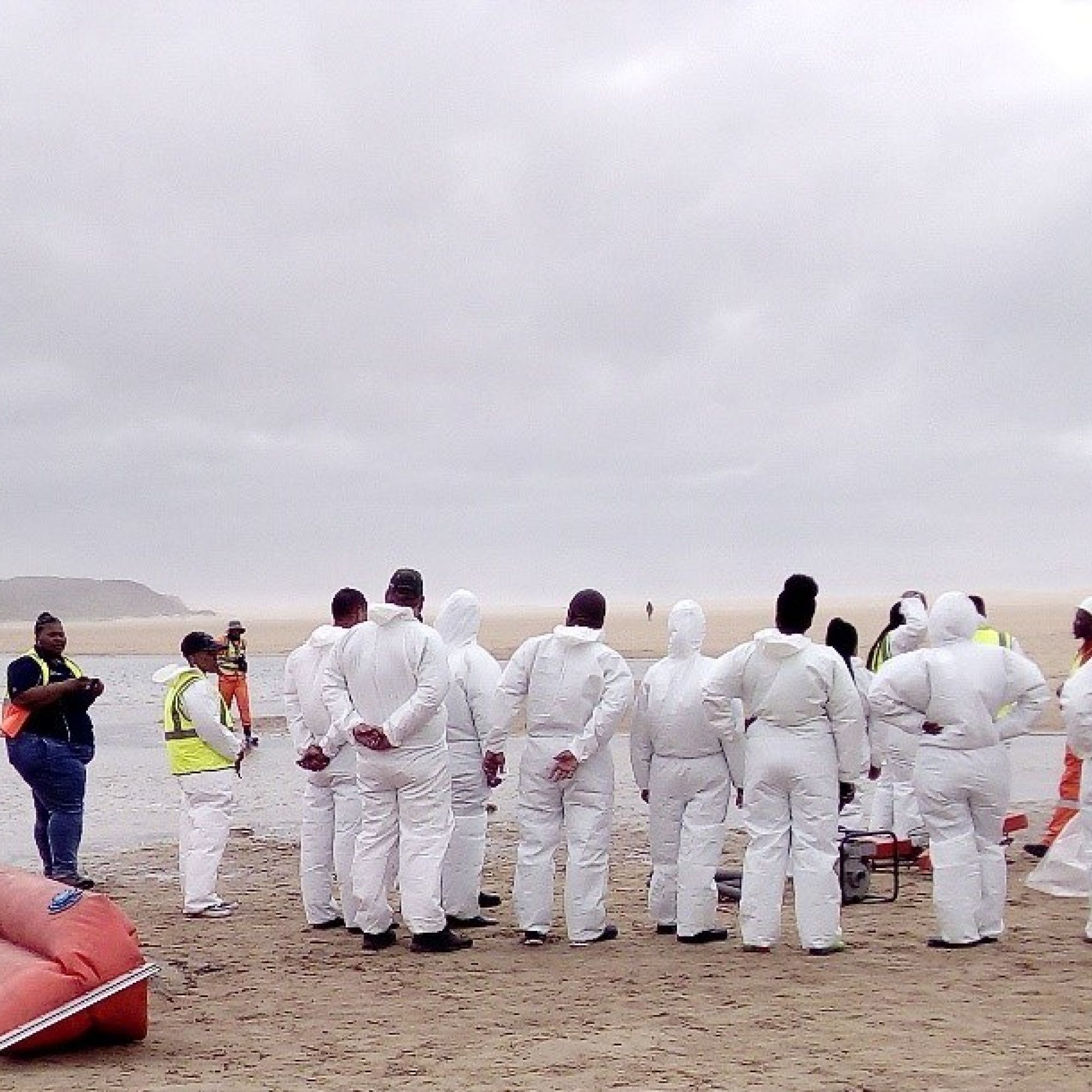
The Eastern Cape’s jewel town of Jeffreys Bay was the focus for the Department of Forestry, Fisheries and Environments (DFFE) Coastal Pollution Management team to run a hands-on workshop aimed at improving awareness and ability of Local Authority staff to respond effectively to a localized oil spill along the weather swept coast.
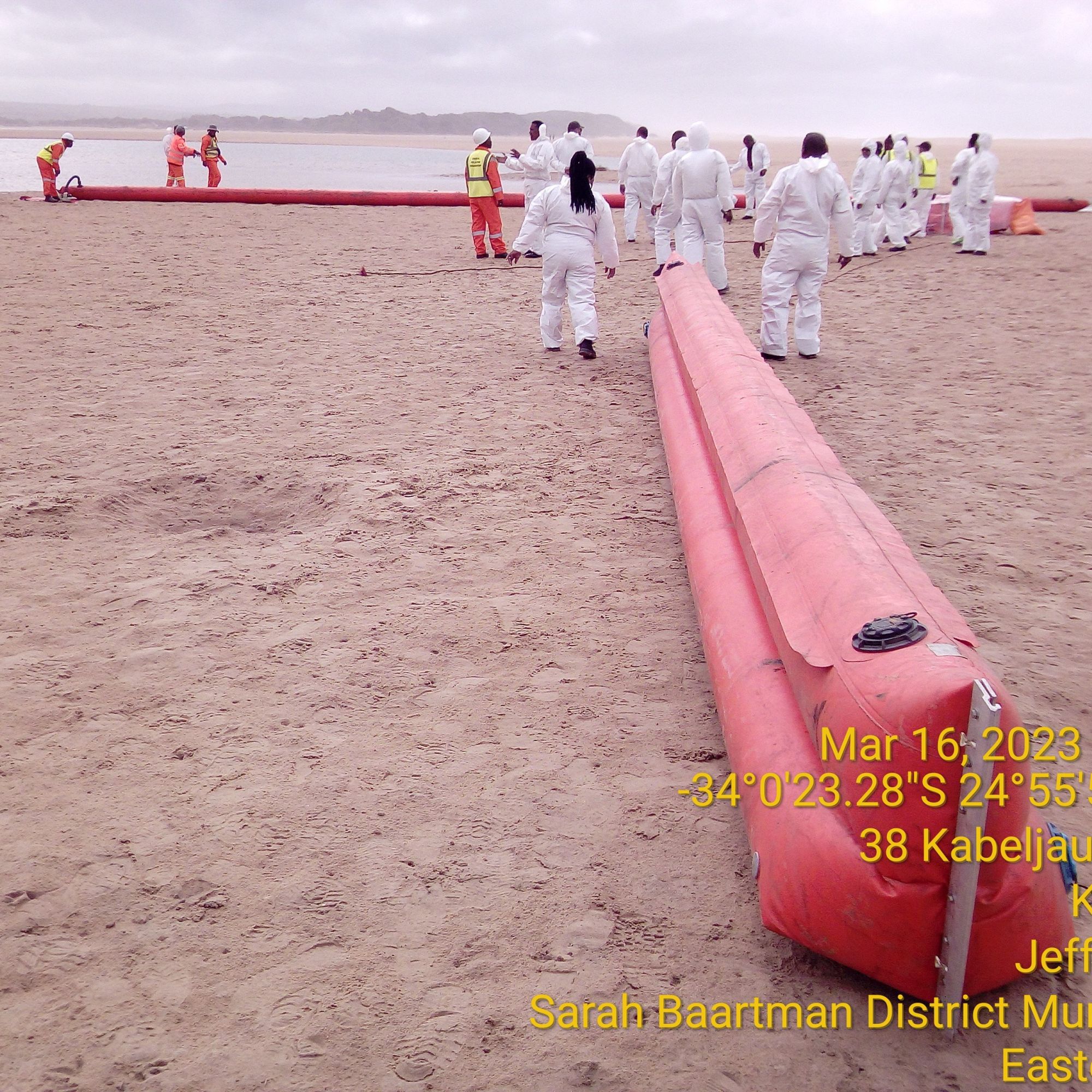
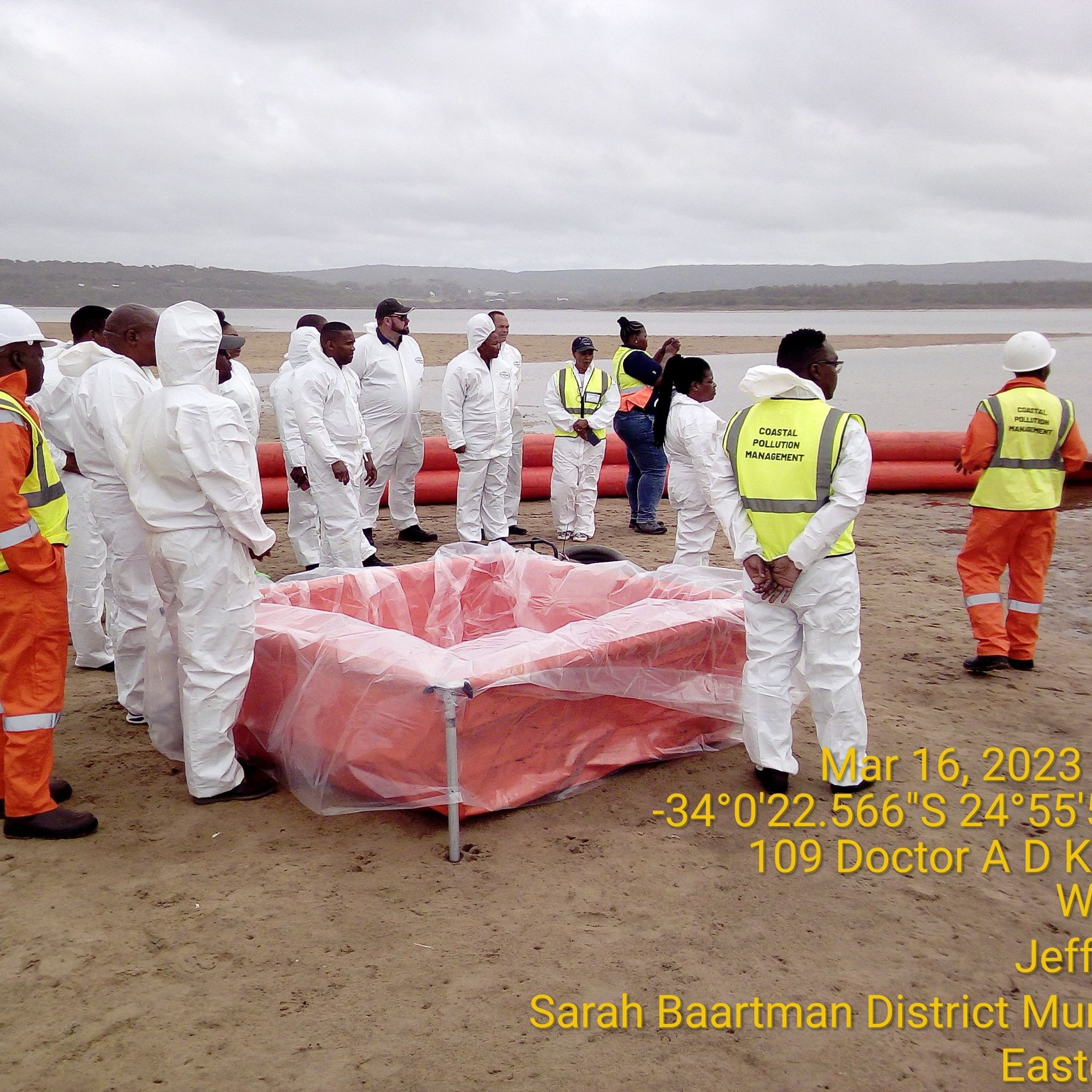
Thirty partner participants from DFFE, SANParks, CapeNature, Sarah Baartman District Municipality and Local Municipalities of Kouga, Koukamma and Nlambe took part in the workshop.
On Day 1, a series of presentations and discussions covered the Causes and Fate of oil spills; the Environmental and Socio-Economic Impacts of oil spills; Principles of oil spill Preparedness and Response and Waste Management.
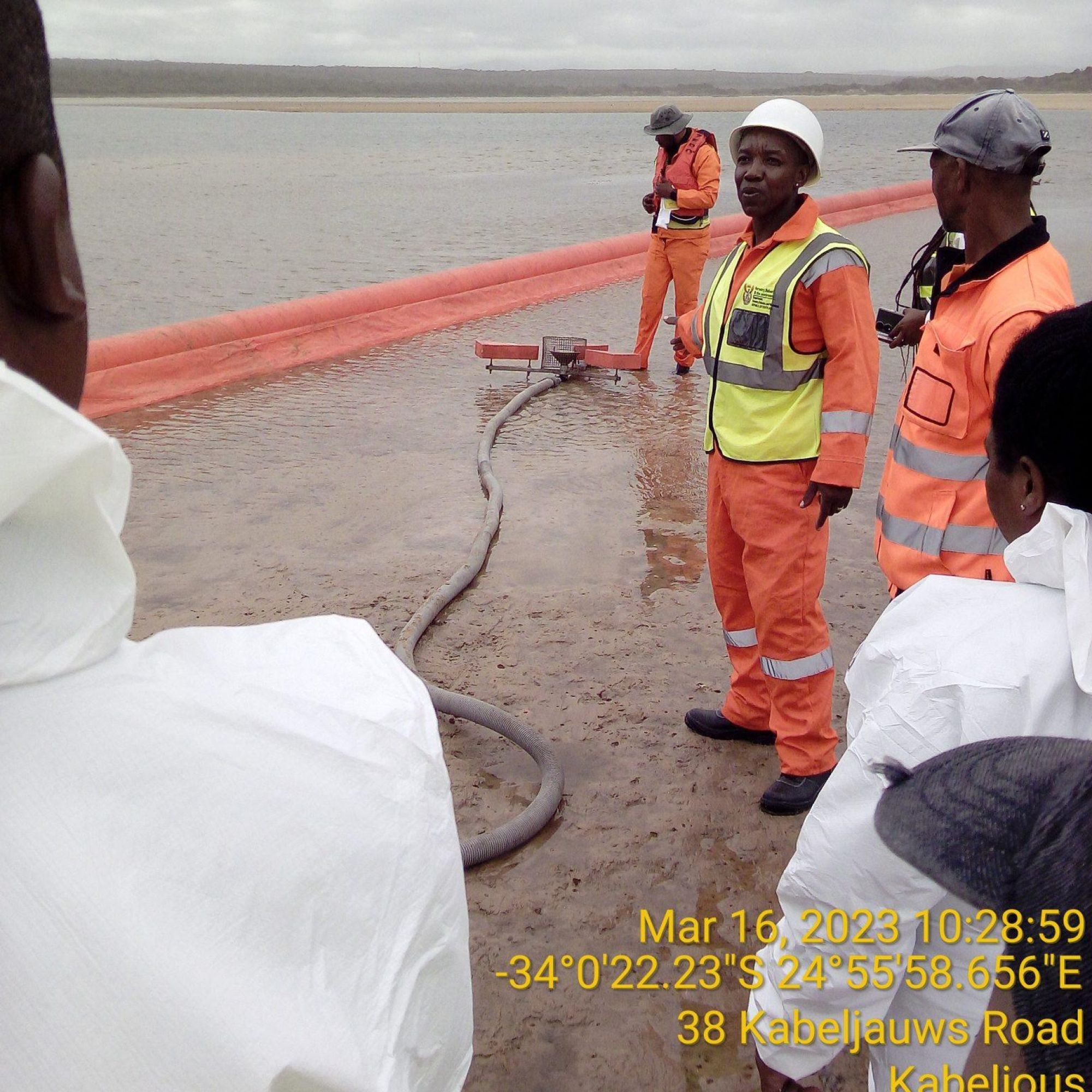
On Day 2, some surprised participants found themselves fully Tyvek coated, wet soled and sandy-handed while the experienced Pollution Management team members instructed the establishment of Hot, Warm and Cold Zones, erecting of signage, pump starting and boom inflation, boom positioning and anchoring, oil skimmer operations, crowd control and management, waste management and several smaller on-site aspects, all under the banner of Environmental Protection, that would be required during a typical response.
Good comradery and cohesive work by all ensured a successful awareness-raising and hands-on experience for all participants.
Related News

Your Perfect Summer Getaway with CapeNature
Embark on an adventure and immerse yourself in the vast open spaces of our 25 nature reserves spread across the Western Cape. With a variety of self-catering accommodations and campgrounds to choose from, we cater to different preferences and budgets.

CapeNature Empowers Volunteers with Replacement Starter Kits
Following an incident where three volunteers from Search and Rescue South Africa (SARZA) were recently robbed in Table Mountain National Park, CapeNature joined forces with Hi-Tec to donate starter kits to the team.

Responsible Angling ensures a Sustainable Future for both the Environment and the Communities that rely on these Resources
The Western Cape is home to an array of freshwater habitats, from serene mountain streams to picturesque dams. Whether you're a seasoned angler or a novice looking to cast your first line, understanding the regulations, and acquiring the necessary permits is crucial for an enjoyable and sustainable fishing experience. Before embarking on your freshwater fishing adventure, it's essential to comprehend the significance of obtaining a permit.

Seeing Stripes: The Kammanassie Cape mountain zebra aerial survey
Spotting a zebra is something of a wonderous task for admirers of wildlife’s beauty, but monitoring of Cape mountain zebra populations provides vital information that is used to inform management decisions and actions and is one of the objectives of the gazetted Biodiversity Management Plan for this species.

Harnessing the Power of NASA’s Technology to Detect Alien Species
When NASA isn’t spending its time exploring the depths of outer space, its lending its technology for the ambitious BioSCape project, which seeks to detect patterns of biodiversity and ecosystem health in the fynbos biome.

Your Bucket List of Things to Do in the Overberg Region Sorted
Pack your outdoor attire when visiting the Overberg and prepare yourself for an adventurous journey while connecting with nature. With an assortment of activities to choose from, visitors are sure to tick off adventure-galore in nature on their bucket lists before heading into 2024.